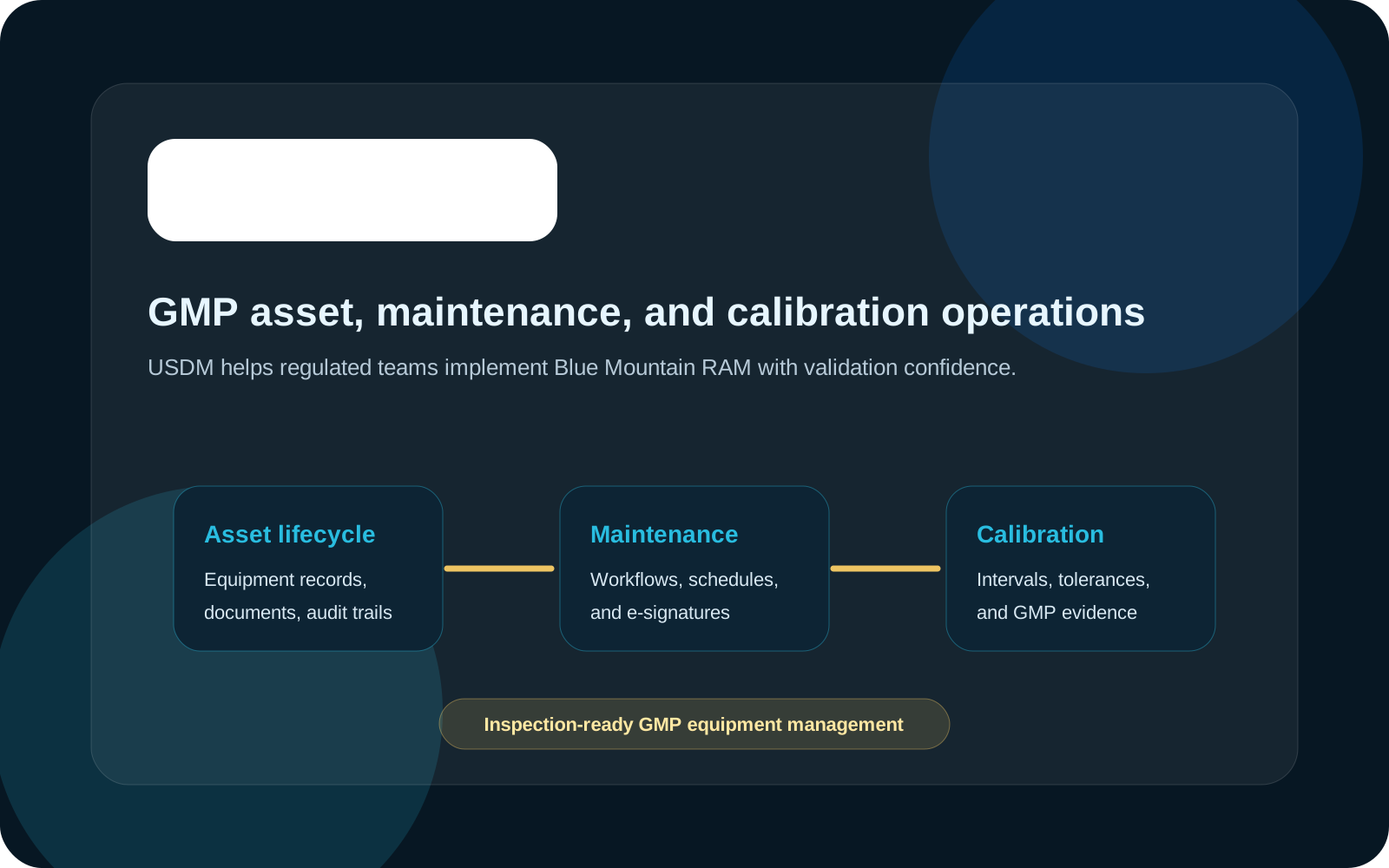
Asset performance management only works when the data underneath it can be trusted.
Manufacturing, facilities, engineering, quality, and IT teams often manage asset, maintenance, and calibration data across disconnected systems. That fragmentation makes it harder to see equipment risk, coordinate work, defend compliance, and make timely decisions.
In this on-demand webinar, experts from Blue Mountain and USDM Life Sciences discuss how regulated organizations can strengthen their data strategy, improve asset performance management (APM), and use AI-enabled insights without losing GxP discipline. Watch the recording to see how connected asset data supports both reliability and inspection readiness.
What you will learn
- Build a stronger asset data foundation: identify the equipment, maintenance, calibration, and operational data needed for better decisions.
- Use APM to improve uptime: understand how connected asset management can reduce reactive work and support predictive maintenance.
- Protect compliance visibility: connect operational improvements to audit trails, controlled workflows, data integrity, and inspection-ready evidence.
- Apply AI where it matters: use analytics and intelligent workflows to prioritize risk, spot performance patterns, and support continuous improvement.
Why APM matters in regulated operations
Life sciences companies need equipment and facility operations that are efficient, compliant, and resilient. APM helps teams move from manual follow-up and siloed records toward a more connected operating model: assets are visible, maintenance is planned, calibration status is controlled, and teams can act before issues become deviations or downtime.
The opportunity is not just better maintenance. It is a cleaner digital thread across assets, data, decisions, and evidence.
Key takeaways
- Data strategy comes first. APM depends on accurate, connected, and usable asset data across maintenance, calibration, quality, and operations.
- APM improves more than uptime. The right operating model can support cost control, resource planning, deviation prevention, and inspection readiness.
- AI needs guardrails. Predictive insights should be tied to governed workflows, validated use cases where appropriate, AI governance, and clear human accountability.
- Partner alignment matters. Blue Mountain provides life sciences asset and calibration capabilities; USDM helps align implementation, validation, data integrity, and change governance to regulated expectations.
KPIs to evaluate APM maturity
Who should watch
- Manufacturing, operations, and facilities leaders responsible for uptime, maintenance, and asset reliability.
- Quality and compliance teams accountable for calibration records, audit trails, deviations, and inspection readiness.
- IT, data, and automation leaders modernizing asset, maintenance, and operational systems.
- Executives evaluating AI, smart factory, and connected operations initiatives in regulated environments.
FAQ: Data and APM in life sciences
What is asset performance management (APM) in a regulated environment?
APM is a connected operating model for managing equipment, maintenance, and calibration so assets stay visible, maintenance is planned, calibration status is controlled, and teams can act before issues become deviations or downtime. In life sciences, it also has to preserve audit trails, controlled workflows, and inspection-ready evidence.
Why is data strategy the starting point for APM?
APM depends on accurate, connected, and usable asset data across maintenance, calibration, quality, and operations. Without a trustworthy data foundation, predictive maintenance and AI insights can mislead rather than help. A stronger data foundation comes first, then the analytics and workflows built on top of it.
How does APM support compliance, not just uptime?
The right operating model ties operational improvements to audit trails, controlled workflows, data integrity, and documented evidence. That connects better maintenance and calibration execution directly to deviation prevention and inspection readiness.
How should AI and predictive maintenance be governed?
Predictive insights should be tied to governed workflows, validated use cases where appropriate, and clear human accountability. An AI governance approach keeps intelligent workflows trustworthy in GxP operations.
What roles do Blue Mountain and USDM play?
Blue Mountain provides life sciences asset and calibration capabilities, while USDM helps align implementation, validation, data integrity, and change governance to regulated expectations. Together that supports an APM program that improves reliability and holds up to inspection.
Watch the on-demand webinar
Watch the full recording with Blue Mountain and USDM Life Sciences to see how regulated organizations strengthen their data strategy, improve APM, and apply AI-enabled insights without losing GxP discipline. If your team is planning an APM or calibration modernization program, talk with USDM about validation, data integrity, workflow design, and governed adoption.
Keep going
For more context, explore USDM’s perspective on enterprise asset management in life sciences and the Blue Mountain partner page. To keep validated asset systems audit-ready as they change, see USDM Cloud Assurance.