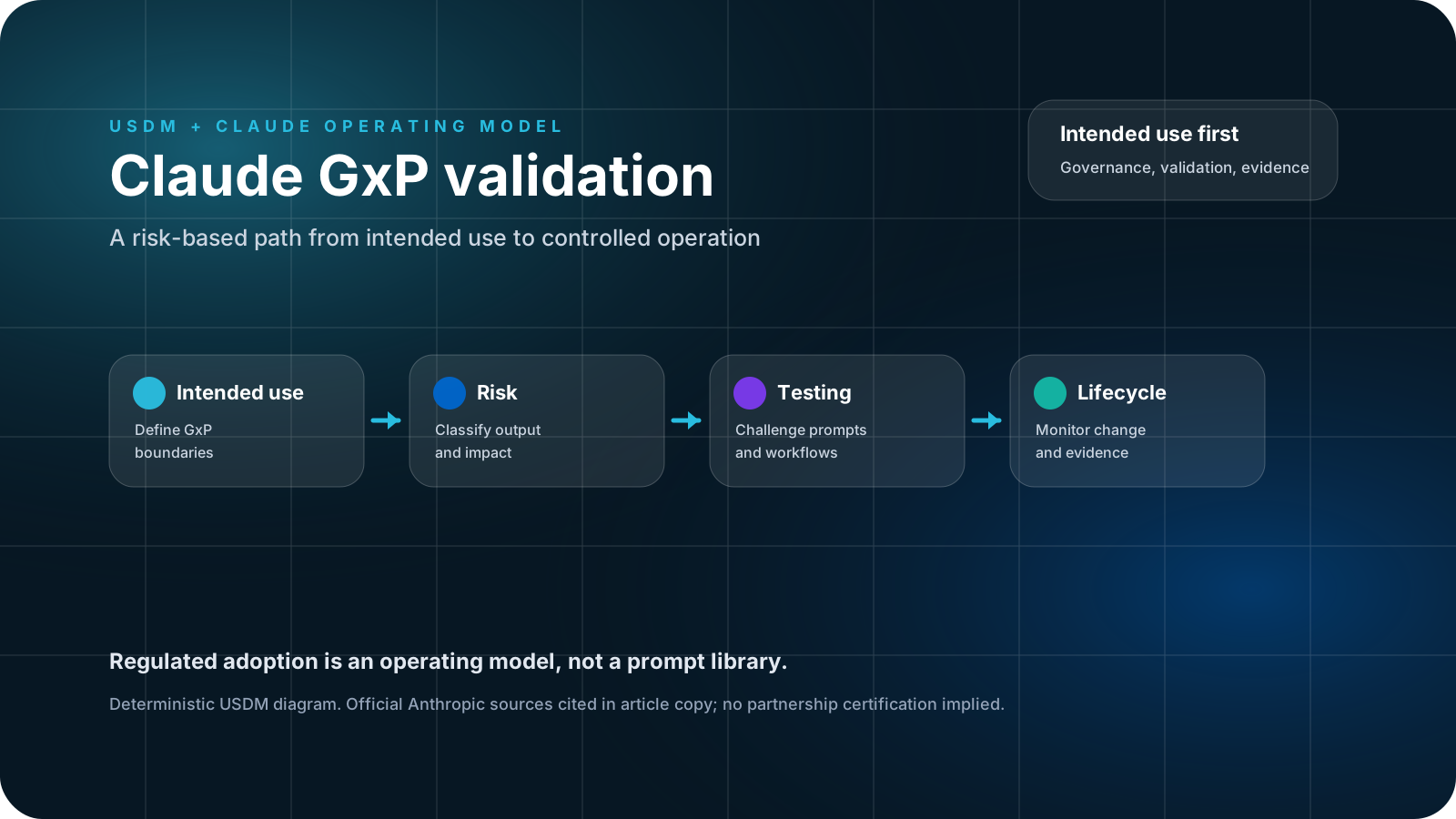
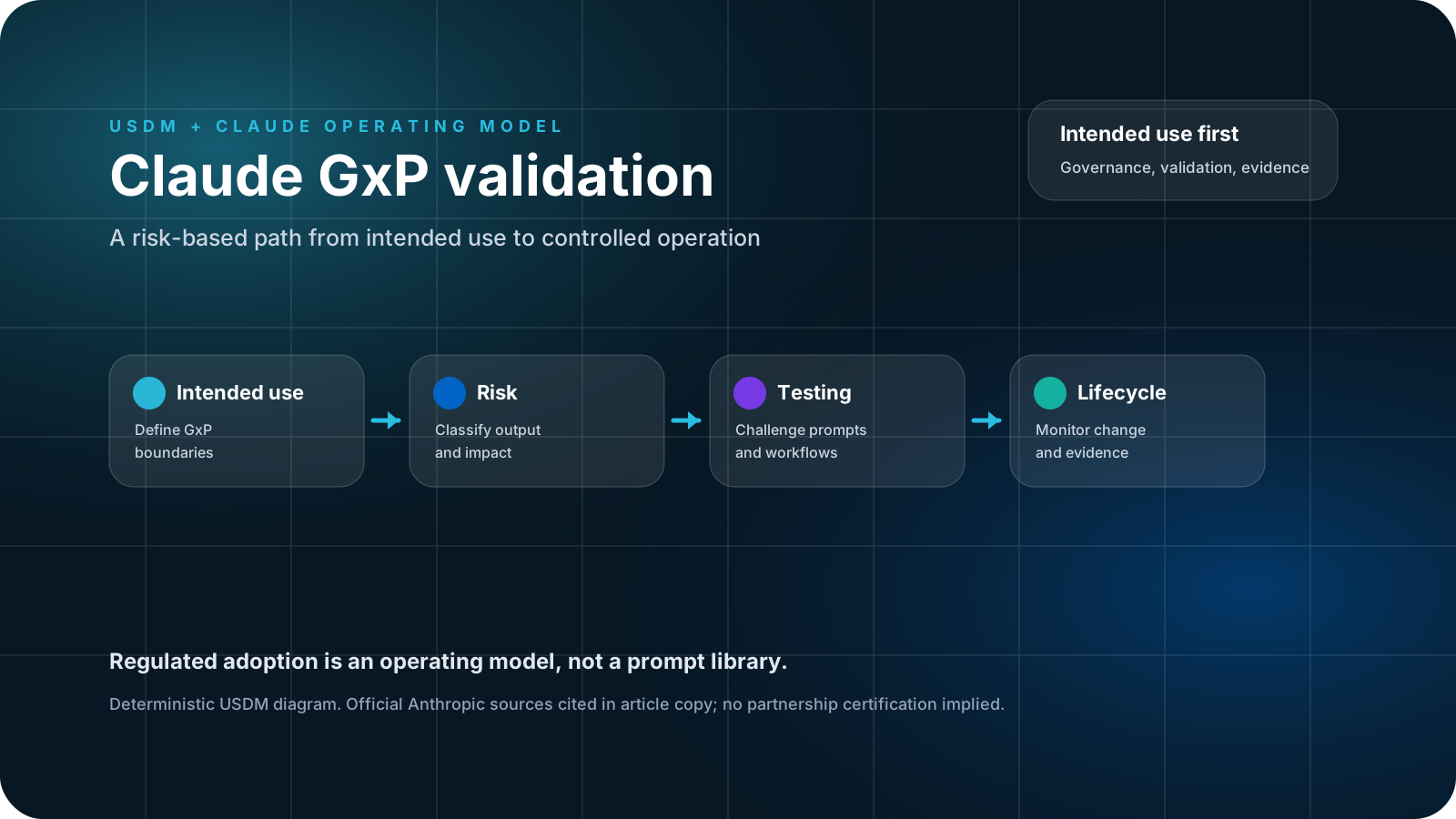
Claude GxP validation starts with a disciplined question: what regulated process will Claude support, and what evidence proves that the process remains controlled? Without that answer, even a promising AI pilot can become an inspection problem.
Anthropic publishes enterprise product information for Claude, including connectors, skills, and enterprise administration concepts. USDM translates that product surface into a life sciences governance model: intended use, risk, validation, human review, monitoring, and change control.
Claude GxP validation begins with intended use
Validation cannot be generic. A Claude-supported document drafting workflow, a retrieval workflow, and an agentic task workflow have different risks. The intended-use statement should identify the process, users, source systems, output, decision impact, and records generated.
This is consistent with the risk-based spirit of the FDA’s Computer Software Assurance guidance, which emphasizes critical thinking and assurance activities based on software use and risk.
Map Claude controls to AI governance frameworks
Regulated organizations do not need a framework museum. They need enough structure to make decisions repeatable. The NIST AI Risk Management Framework gives useful language for mapping, measuring, managing, and governing AI risk. ISO/IEC 42001 provides a management-system lens for AI. The EU AI Act adds regulatory expectations for certain AI uses in Europe.
USDM uses these frameworks pragmatically. The goal is not to over-document every AI interaction. The goal is to decide which Claude workflows require controlled procedures, testing, monitoring, and retained evidence.
Core governance controls
- Use-case intake: capture business purpose, owner, data classes, user group, and expected benefit.
- Risk classification: assess GxP impact, privacy impact, security exposure, output criticality, and level of automation.
- Data controls: define approved sources, excluded sources, connector scope, and retention expectations.
- Human review: require qualified review before Claude output influences regulated decisions.
- Lifecycle control: evaluate changes to prompts, skills, connectors, models, and workflow steps.
Design testing around workflow risk
Claude’s value comes from flexible reasoning. That flexibility means test strategy should focus on the configured workflow and its failure modes. For example, a low-risk summarization aid may require usability checks and reviewer training. A workflow supporting quality investigation triage may require challenge testing, source-grounding checks, reviewer acceptance criteria, and change impact documentation.
Claude GxP validation checklist
- Approved intended use and prohibited uses.
- Risk classification with rationale.
- Approved source systems and data boundaries.
- Prompt, skill, connector, or MCP configuration controls where applicable.
- Test scenarios for expected, edge, and unacceptable outputs.
- Human review criteria and evidence retention plan.
- Release and change impact process.
Where Anthropic product features fit
Claude connectors can reduce manual context gathering by linking Claude to trusted tools. Claude Skills can package repeatable expertise. Anthropic documentation on tool use with Claude explains how Claude can call tools in an agentic loop.
For GxP teams, each feature should be treated as part of the validated configuration when it materially affects the workflow. If a skill changes the procedure, if a connector changes the source context, or if tool use changes the action path, the validation and change-control plan should reflect it.
FAQ: Claude GxP validation
Is Claude itself validated for GxP?
No public vendor page makes a blanket validated-for-GxP claim for every customer use. Life sciences companies validate their configured use of Claude based on intended use, controls, data, workflow, and risk.
How much testing is enough?
Testing should be risk-based. Lower-risk productivity workflows may need limited documented assurance. Higher-impact GxP workflows require stronger test scenarios, reviewer criteria, evidence retention, and lifecycle monitoring.
Who should own Claude governance?
Ownership should be cross-functional. Quality, IT, Security, Privacy, business process owners, and validation leads each own part of the control model. A single AI governance forum should make final policy decisions.
FAQ: Claude GxP Validation Governance
What should an intended-use statement for a Claude workflow include?
The intended-use statement should identify the process, users, source systems, output, decision impact, and records generated. Validation cannot be generic, because a document drafting workflow, a retrieval workflow, and an agentic task workflow each carry different risks.
Which AI governance frameworks does USDM map Claude controls to?
USDM uses the NIST AI Risk Management Framework for mapping, measuring, managing, and governing AI risk, ISO/IEC 42001 as a management-system lens for AI, and the EU AI Act for regulatory expectations on certain AI uses in Europe. These are applied pragmatically to decide which Claude workflows require controlled procedures, testing, monitoring, and retained evidence.
When do Anthropic product features become part of the validated configuration?
Each feature should be treated as part of the validated configuration when it materially affects the workflow. If a skill changes the procedure, if a connector changes the source context, or if tool use changes the action path, the validation and change-control plan should reflect it.
What are the core governance controls USDM recommends?
The core controls are use-case intake, risk classification, data controls, human review, and lifecycle control. Together they capture business purpose and owners, assess GxP and privacy impact, define approved and excluded data sources, require qualified human review before output influences regulated decisions, and evaluate changes to prompts, skills, connectors, models, and workflow steps.
Conclusion: validation makes Claude scalable
Claude GxP validation is not about slowing adoption. It is how regulated organizations scale adoption without losing control. Define intended use, classify risk, test the workflow, preserve human accountability, and manage change.
For a broader starting point, read Claude for Life Sciences Regulated Workflows, review USDM’s Anthropic Claude services, or ask USDM to assess your AI governance baseline.