Executive takeaways
- Paperless validation is available now: the page positions ProcessX as an integrated VLM and ALM platform with automated regression testing and release management.
- The model supports GxP and SOX systems: the page highlights GxP and SOX ready workflows, SaaS integrations, flexibility, support, and citizen development.
- Business outcomes are explicitly tied to validation effort: cited outcomes include up to 80% lower compliance costs and 5x speed and efficiency from test automation.
- Continuous compliance is the operating model: ProcessX connects validation evidence, release management, and Cloud Assurance instead of treating validation as a one-time project.
The ProcessX Paperless Validation page focuses on a core life sciences problem: validation work is still too often managed through documents, trackers, manual test evidence, and disconnected review processes.
ProcessX positions paperless validation as a practical alternative. The page describes an integrated Validation Lifecycle Management (VLM) and Application Lifecycle Management (ALM) platform with automated regression testing, release management, and GxP services.
What paperless validation changes
Traditional validation often creates evidence, but not always in a way that is easy to operate over time. Requirements may sit in one system, tests in another, approvals in documents, and release impact decisions in spreadsheets or email. That fragmentation slows change and makes audit response harder.
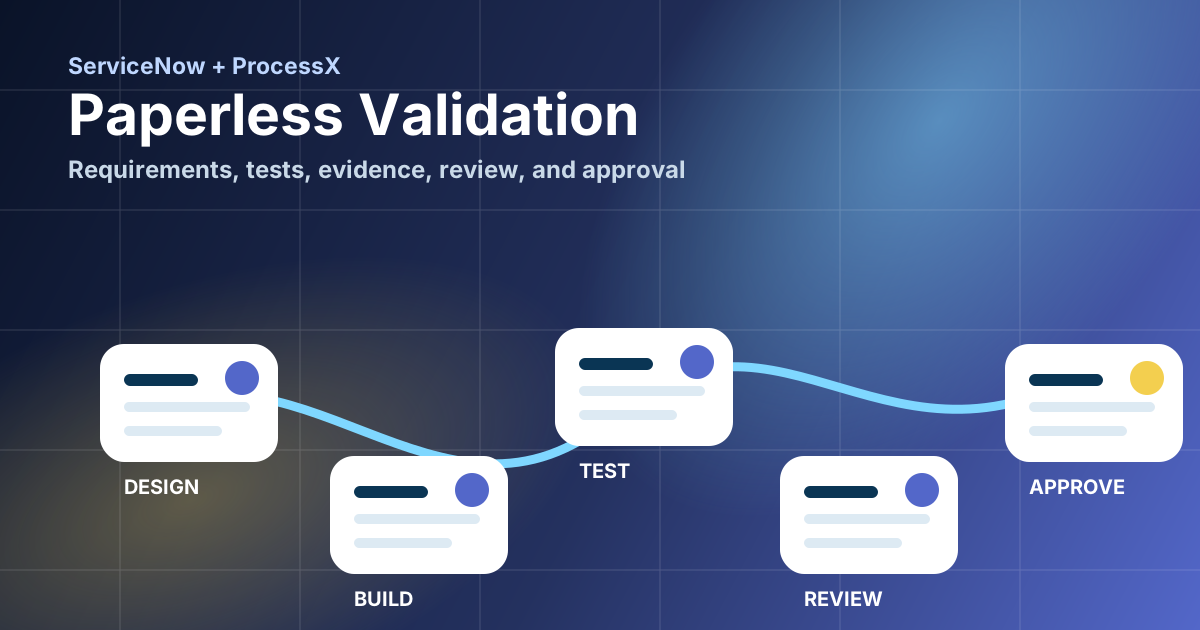
Paperless validation changes the model by connecting requirements, risk, tests, traceability, approvals, and release evidence in a controlled workflow. For cloud and SaaS systems, that matters because change keeps arriving after go-live.
GxP and SOX ready capabilities
The page lists capabilities that matter to regulated teams: streamlined integration with GxP or SOX SaaS systems, advanced continuous compliance management, flexibility and customization for GxP or SOX workflows, enhanced user experience and citizen development, and comprehensive GxP and SOX services and support.
That mix is important. A paperless validation platform has to be structured enough for regulated evidence, but flexible enough to support the way business systems actually change. Teams need controlled workflow patterns without turning every improvement into a documentation marathon.
Validation evidence as a connected lifecycle
Plan
- Requirements
- Risk and intended use
- ALM/VLM structure
Verify
- Test automation
- Regression coverage
- Traceability matrix
Maintain
- Release impact
- Audit-ready workflows
- Cloud Assurance
Business outcomes: cost, speed, and single source of truth
The page lists several business outcomes: reducing compliance costs by up to 80%, harmonizing quality processes using a CSA methodology, increasing speed and efficiency by 5x through test automation, managing GxP, SOX, and non-GxP systems from a single source of truth, choosing from dozens of audit-ready workflows, and deploying citizen development workflows from a low-code/no-code platform.
These outcomes are credible only when the implementation is scoped properly. The right paperless validation model defines which systems are GxP or SOX relevant, where automated tests make sense, how risk-based validation will be applied, and which workflows can be safely reused.
CSA alignment and automated testing
The page connects paperless validation to a CSA methodology. That matters because Computer Software Assurance shifts attention toward critical thinking, intended use, and risk-based evidence rather than treating every test artifact as equal.
Automated regression testing can support that model when it is connected to requirements, risk, change impact, and release management. The test is not valuable merely because it runs automatically. It is valuable when it proves the right thing and feeds an evidence model that Quality can trust.
AI, cloud change, and continuous compliance
The page includes a Summit clip about AI leaving the pilot phase and the need for continuous compliance, automated verification, and proactive oversight to ensure AI performance does not drift after platform updates. That framing is directly relevant to paperless validation.
As AI capabilities enter regulated platforms, validation evidence will need to cover not only configuration and workflow behavior, but also model behavior, release impact, monitoring, and human oversight. USDM's USDM Cloud Assurance service is built around that continuous assurance posture.
Explore ProcessX by USDM, or talk to USDM about paperless validation, VLM, ALM, and test automation.
FAQ: Paperless Validation with ProcessX
What is paperless validation?
Paperless validation replaces disconnected documents and manual trackers with controlled digital workflows for requirements, risk, testing, traceability, approvals, and release evidence. The page positions this through VLM, ALM, automated regression testing, and release management.
How does ProcessX support CSA?
The page states that ProcessX can harmonize quality processes using a CSA methodology. In practice, that means focusing validation effort on intended use, risk, critical functions, and evidence that supports defensible decisions.
Can paperless validation support SOX systems too?
Yes. The page describes GxP and SOX ready capabilities, including integrations with GxP or SOX SaaS systems and customization for GxP or SOX workflows.
Why is test automation useful in validation?
Test automation can increase speed and consistency, especially for regression testing. It is most useful when connected to requirements, risk, traceability, release impact, and Quality review rather than treated as a standalone testing tool.