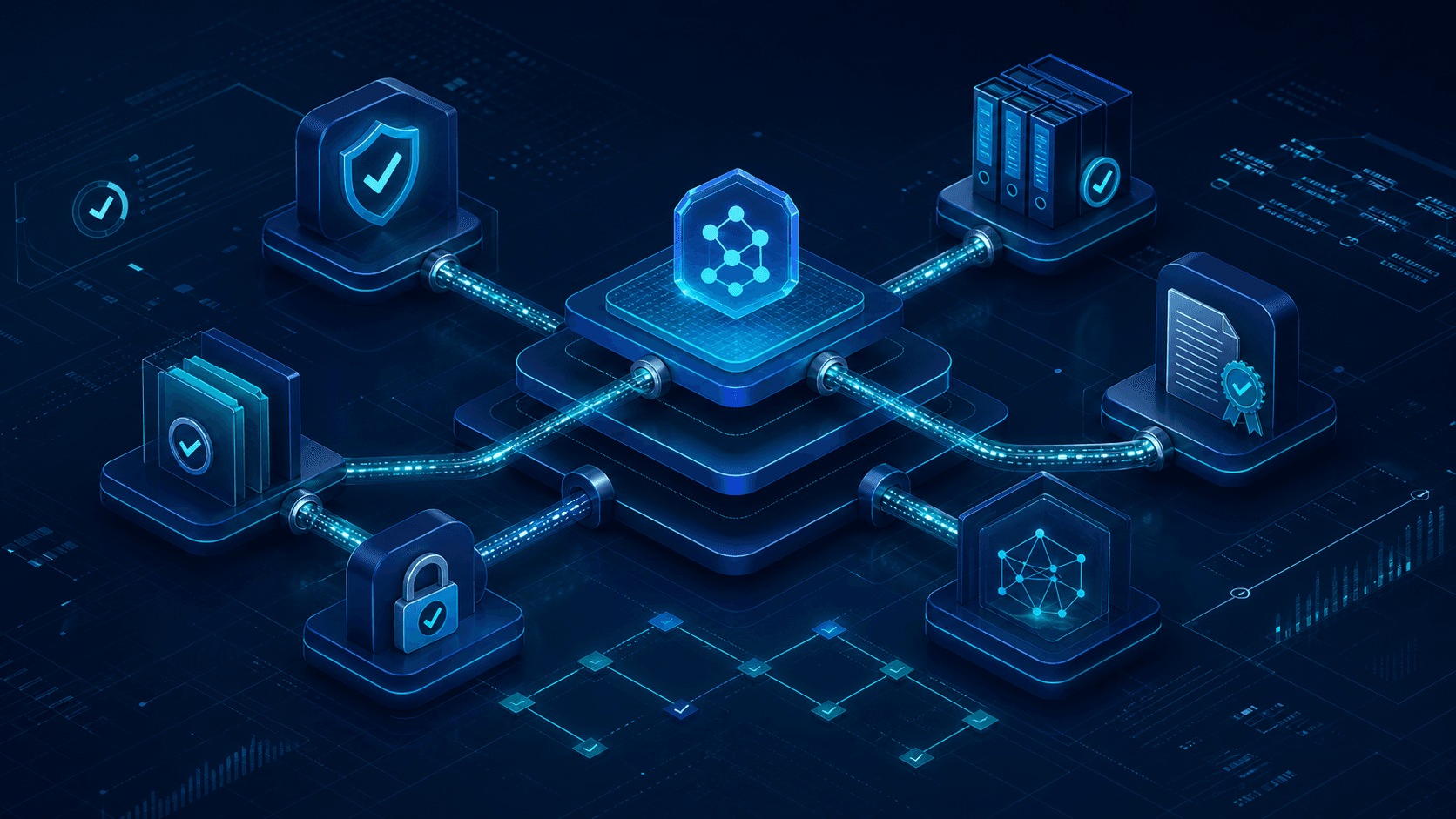
AI value in life sciences depends on context. A model that cannot safely reach trusted systems will stay trapped in generic answers. A model that can reach too much, too quickly, creates a different problem: uncontrolled access, unclear evidence, and risk that moves faster than governance.
That is why Anthropic's public product surface around Claude connectors, Claude Skills, and the Model Context Protocol matters. Together, they point toward a new integration layer for AI-assisted work. In regulated environments, that layer has to be designed like critical infrastructure, not configured like a convenience feature.
The integration problem AI exposes
Most life sciences organizations run on a dense ecosystem of quality systems, regulatory repositories, clinical platforms, commercial systems, collaboration tools, data lakes, and document stores. Traditional integrations move records between systems. AI integrations add a new pattern: a user asks for help, and the AI needs governed context from multiple systems to respond or act.
Anthropic describes MCP as an open standard for connecting AI assistants to the systems where data lives. That standardization is useful because one-off integrations do not scale well. It also makes governance more urgent because a reusable protocol can expand quickly across teams, vendors, and workflows.
Regulated AI integration framework
- Intended use: define the workflow, user role, source systems, outputs, and prohibited uses.
- Governed context: connect only approved repositories, records, fields, and document classes.
- Repeatable execution: package approved instructions into versioned skills where the work pattern repeats.
- Evidence: retain the prompts, sources, outputs, actions, and review decisions needed for inspection readiness.
Connectors bring context. Skills package repeatable work.
Connectors help Claude reach approved systems and content. Skills can package instructions, workflows, and domain-specific expertise for repeatable tasks. Used well, those capabilities can reduce one-off prompting and make AI assistance more consistent.
Used poorly, they can create hidden process variation. A skill that drafts a regulatory summary, reviews an SOP, or performs a quality triage step is not merely a productivity shortcut. It may become part of how work is performed. That means it needs ownership, versioning, testing, monitoring, and retirement criteria.
Regulated design questions
Before connecting Claude to enterprise systems, USDM recommends answering practical control questions:
- Access: Which users, roles, groups, and service identities can invoke the connector or skill?
- Scope: Which repositories, record types, fields, projects, and documents are in scope?
- Action: Is Claude reading, drafting, recommending, updating, or triggering downstream workflow?
- Evidence: What prompts, sources, outputs, and review decisions must be retained?
- Validation: What testing is appropriate for the intended use and risk level?
- Change: Who approves changes to connectors, skills, prompts, permissions, and model configuration?
A life sciences integration layer
USDM's Claude for life sciences operating model treats connectors, MCP, and skills as the middle layers between intended use and agent workflows. That sequencing matters. If organizations jump straight to agents without disciplined context and repeatable skills, they create brittle automation with impressive demos and weak control.
A better path is staged: define the use case, connect only the approved context, package repeatable expertise into controlled skills, then evaluate whether agentic workflow is appropriate. The approach aligns with USDM's Layer 0-5 operating model for Claude adoption and the broader need for AI readiness assessment in life sciences.
How to start
Start with one workflow where better context clearly matters and the risk can be bounded. Examples include inspection readiness evidence retrieval, SOP impact review, regulatory intelligence briefing, or controlled commercial enablement content. Build the connector and skill governance once, then reuse the pattern.
As teams mature, they can evaluate whether these governed integrations should support agents in GxP workflows. The key is to move from controlled context to controlled skills before granting broader tool use or autonomy.
FAQ: MCP, connectors, and skills for regulated AI
What is MCP in regulated AI?
MCP is a standard pattern for connecting AI assistants to external systems and data sources. In regulated life sciences, MCP should be governed as integration infrastructure with access controls, testing, monitoring, and change approval.
Are Claude Skills validated software?
Not automatically. The validation expectation depends on intended use, risk, and how the skill affects regulated work. A skill used for informal drafting may require lightweight controls, while a skill supporting GxP decisions may need documented testing and lifecycle management.
How should life sciences companies govern connectors?
Start with least-privilege access, approved repositories, documented data boundaries, user-role mapping, audit evidence, and periodic review. Connector scope should match the approved use case rather than broad enterprise access.
When should connectors and skills support agents?
Only after the intended use, context, skill behavior, human review, and evidence model are understood. Agents add autonomy, so they should inherit controls from the connector and skill layers instead of creating new uncontrolled paths.
Conclusion: govern the AI integration layer before scale
MCP, connectors, and skills can make regulated AI more useful because they bring Claude closer to trusted work. They also bring Claude closer to regulated risk. The organizations that scale successfully will treat this layer as governed infrastructure, with clear ownership and defensible evidence.
USDM helps life sciences teams design Claude governance, connector strategy, skill lifecycle management, and readiness roadmaps. Start with the USDM Anthropic partner model or contact USDM to define a regulated AI integration roadmap.