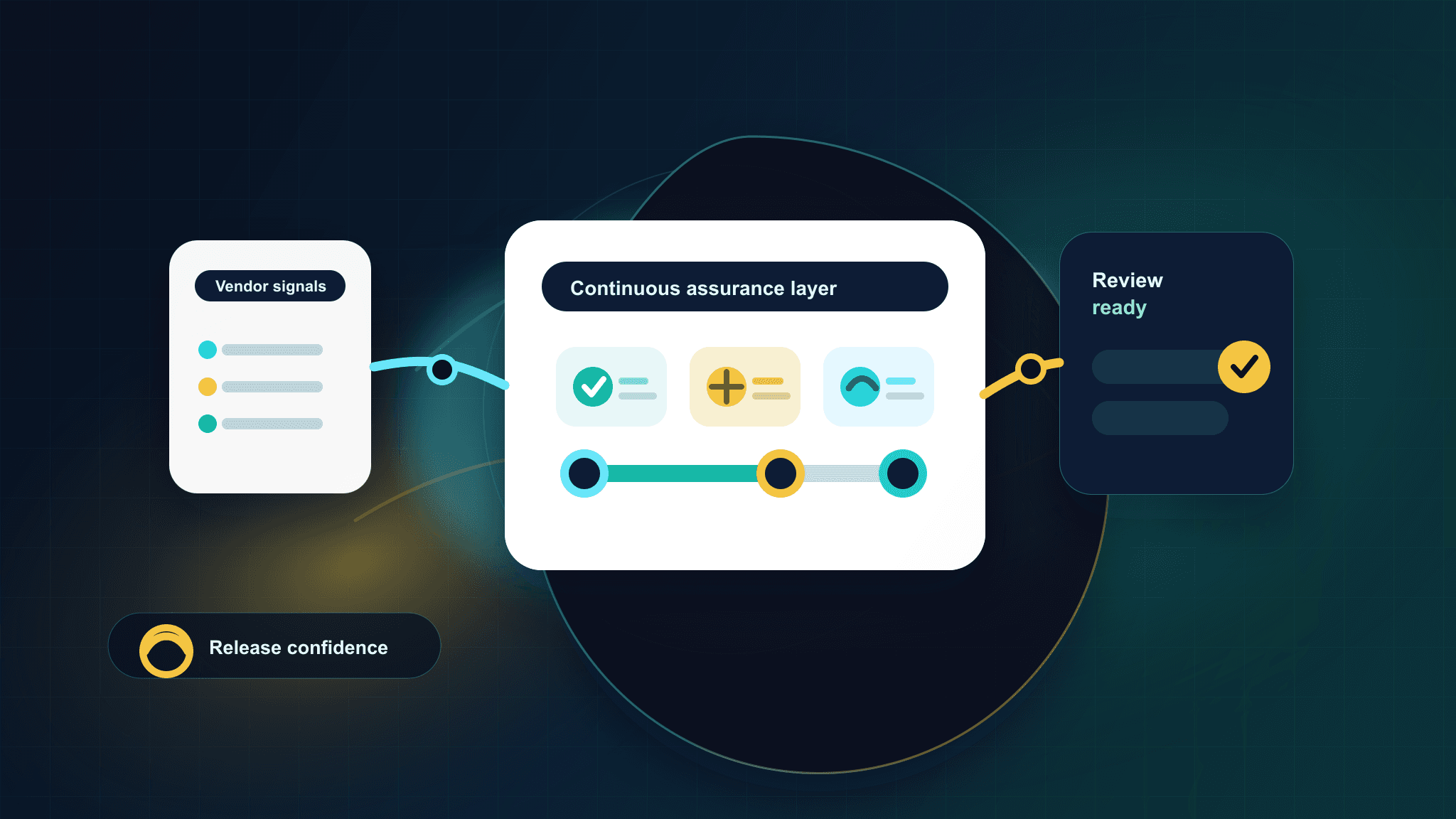
Executive takeaways
- SaaS release velocity creates validation drag: Veeva, DocuSign, Box, Oracle, Salesforce, ServiceNow, and other cloud platforms change on vendor-controlled schedules, forcing regulated teams to assess impact again and again.
- Internal validation costs scale quickly: the source article estimates annual internal validation effort can reach $80K-$150K for Veeva Vault, $180K-$420K for Oracle Clinical One, and $600K-$1.2M across a mid-sized portfolio of validated SaaS platforms.
- Cloud Assurance changes the operating model: USDM Cloud Assurance turns release monitoring, impact assessment, testing evidence, vendor audit support, and validation documentation into a subscription-based sustainment model.
- ProcessX makes the evidence operational: ProcessX Validation Lifecycle Management helps connect release changes, requirements, risks, tests, approvals, audit trails, and inspection-ready records in one governed workflow.
Life sciences teams have moved critical work into SaaS platforms, but validation has not always kept pace. Every vendor release creates the same practical question: does this change affect GxP use, regulated records, data integrity, security posture, or the validated state?
For platforms such as Veeva Vault, DocuSign, Box, Oracle Clinical One, Salesforce, and ServiceNow, that question repeats throughout the year. Release notes arrive, system owners need impact assessments, validation teams need test evidence, Quality needs review, and business owners still expect the system to keep moving.
USDM Cloud Assurance was built for that reality. The goal is not to skip validation. The goal is to stop rebuilding the same release-validation effort from scratch for every platform, every release, and every regulated team.
The SaaS validation treadmill
Traditional SaaS validation creates repetitive work. Multiple companies analyze the same vendor release notes, execute similar regression tests, update similar traceability records, and write similar validation reports. Each organization still owns its intended use and final decision, but much of the release intelligence and evidence pattern is duplicated across the market.
The source article describes this as a compliance tax. Highly skilled validation teams spend too much time proving that systems still work as expected after routine vendor changes, while the organization gets limited institutional learning from one release cycle to the next.
That burden grows with the number of validated platforms. The article cites estimated annual internal validation effort of $80K-$150K for Veeva Vault depending on configuration complexity, $180K-$420K for Oracle Clinical One, $50K-$90K for DocuSign, $40K-$80K for Box, $70K-$120K for Salesforce, and $60K-$120K for ServiceNow / ProcessX. For a mid-sized pharma portfolio, the total can become material very quickly.
Traditional managed services still repeat the old model
Many companies respond to the SaaS validation burden by hiring help release by release. That can reduce internal strain, but it often keeps the same reactive pattern: wait for the release, scope the work, mobilize resources, execute tests, assemble documentation, and close the package.
The economics still scale with effort. Every release becomes another mini-project. Every platform needs another round of coordination. Lessons learned may stay trapped in project files instead of becoming a reusable compliance operating model.
For related context, review USDM Cloud Assurance for continuous GxP compliance and ProcessX solutions for GxP and non-GxP workflow management.
Move from reactive release projects to continuous SaaS validation coverage
Vendor change
- Release notes
- Security posture
- Platform behavior
USDM assurance
- Impact assessment
- Risk-based testing
- Vendor audit evidence
Client decision
- Review package
- Approve release
- Sustain validated state
Cloud Assurance is a different architecture
Cloud Assurance starts from a different premise: if many regulated companies need to understand the same vendor releases, the core release intelligence can be produced once by specialists and delivered through a consistent evidence model.
That model combines validated expertise, continuous intelligence, and subscription coverage. USDM monitors vendor releases, assesses GxP impact, prepares risk-based validation evidence, tracks vendor security posture where applicable, and packages the information so client teams can review, approve, and retain the decision.
Organizations still need to evaluate the evidence against their own intended use, configuration, procedures, risk profile, and quality system. Cloud Assurance reduces the repetitive burden around release interpretation, test execution, documentation, and vendor oversight so internal teams can focus on the decisions that truly belong to them.
What subscribers receive
For vendor releases, Cloud Assurance can provide release impact assessments, pre-executed test evidence, traceability updates, validation reports, deviation alerts, cyber posture updates, and annual vendor audit support. The exact package depends on the subscribed platform, the regulated use case, and the evidence model agreed with the client.
Those deliverables are especially useful when connected to ProcessX by USDM. ProcessX Validation Lifecycle Management can help turn each release into a governed workflow: change record, impact assessment, requirements traceability, test evidence, approval, audit trail, and inspection-ready package.
That matters because validation evidence loses value when it is scattered across inboxes, SharePoint folders, spreadsheets, QMS exports, and disconnected ticket queues. A connected lifecycle model makes it easier to show what changed, what was tested, what was approved, and why the system remained fit for intended use.
Annual vendor audits reduce another hidden burden
Ongoing SaaS validation is not only about release notes. Regulated teams also need supplier oversight. For GxP-critical vendors, annual supplier qualification activities can require audit coordination, evidence review, report writing, findings follow-up, CAPA tracking, and inspection-ready retention.
Cloud Assurance includes annual vendor audit support for subscribed platforms. That gives life sciences teams a more consistent way to cover data integrity, change control, security, incident management, business continuity, audit findings, vendor responses, and closure evidence.
For broader vendor governance context, see best practices for software vendor qualification and outsourcing cloud vendor qualification.
How the workflow changes
In the traditional model, teams discover a release, assemble a project team, analyze release notes, draft impact assessments, execute tests, document results, route approvals, and then deploy. The source article frames that work as a multi-week cycle that can consume 40-120 hours per release.
In a Cloud Assurance model, USDM monitors the release, creates or supports the change workflow, drafts the impact assessment, executes or prepares risk-based evidence, and delivers the validation package for client review. The client still approves the release, but the review effort can be measured in days rather than weeks when the scope is well defined.
What to evaluate before moving to Cloud Assurance
- Validated platform inventory: which SaaS platforms are GxP-critical, business-critical, or tied to regulated records?
- Release burden: how many releases, patches, and configuration changes require assessment each year?
- Evidence gaps: where are impact assessments, test results, approvals, and vendor audit records hard to retrieve?
- Intended use: which platform functions touch patient safety, product quality, data integrity, or regulated decisions?
- Operating layer: whether ProcessX VLM, ServiceNow workflows, QMS records, and approval paths are connected enough to sustain the evidence model.
Cloud Assurance and regulated platform partners
Cloud Assurance is especially relevant for the platforms life sciences companies rely on every day. USDM supports regulated operating models across Veeva, DocuSign, Box, Oracle, Salesforce, and ServiceNow.
The common thread is not the vendor name. It is the need to keep the system fit for intended use as the platform changes. That includes 21 CFR Part 11, Computer Software Assurance, data integrity, vendor qualification, change control, testing, and documented approval.
The inspection-ready promise
When an investigator asks for the validation package behind a recent SaaS release, the organization should not have to reconstruct the story. It should be able to show linked requirements, risks, tests, approvals, vendor release context, cyber or supplier signals where relevant, and evidence that the system remains controlled.
Cloud Assurance and ProcessX help make that story available before the inspection request arrives. The practical value is cleaner evidence, faster review, fewer redundant release projects, and a stronger answer to the question every regulated SaaS owner has to face: are we still validated after this change?
Explore USDM Cloud Assurance, review ProcessX by USDM, or talk to USDM about reducing SaaS release validation burden.
FAQ: Cloud Assurance and SaaS validation
What is Cloud Assurance for SaaS validation?
Cloud Assurance is USDM's managed model for helping regulated life sciences teams keep SaaS and cloud platforms validated as vendors release updates. It can include release monitoring, impact assessments, risk-based testing evidence, validation documentation, vendor audit support, and inspection-ready records.
Does Cloud Assurance replace client approval?
No. Regulated companies still own intended use, final quality decisions, and release approval. Cloud Assurance reduces repetitive release-validation work and packages evidence so client teams can review and approve changes with better context.
How does ProcessX support Cloud Assurance?
ProcessX can provide the workflow layer for validation lifecycle management: change records, impact assessments, requirements traceability, test evidence, approvals, audit trails, and inspection-ready reporting. That keeps Cloud Assurance evidence connected to daily regulated operations.
Which platforms are good candidates?
Cloud Assurance is most useful for frequently changing platforms that support GxP processes or regulated records, including Veeva, DocuSign, Box, Oracle, Salesforce, ServiceNow, and cloud infrastructure used for regulated workloads.
What is the first step?
Start with a validated platform inventory and release-burden assessment. Identify the systems that change often, the evidence required for each release, the current approval path, and the gaps that make inspection readiness harder than it needs to be.