Executive takeaways
- Applicability comes before validation depth: teams need to know which regulations, standards, and controls apply before deciding how much testing or documentation is required.
- Scope drives the assessment: intended use, data sensitivity, integrations, user roles, audit trails, and GxP impact shape the compliance answer.
- ProcessX operationalizes the workflow: regulatory applicability assessments connect to validation lifecycle management and periodic review in ProcessX.
- Cloud Assurance keeps the answer current: applicability is not a one-time decision when cloud systems, workflows, and releases keep changing.
Regulatory applicability assessment is a foundational compliance step. Before a team decides how to validate, document, test, or monitor a system, it needs to determine which requirements actually apply.
That matters because life sciences organizations operate across FDA, EMA, ICH, GxP, and related standards. Not every system has the same risk profile. Not every workflow touches product quality, patient safety, regulated records, or submissions. A good applicability assessment separates real obligations from generic compliance anxiety.
What a regulatory applicability assessment answers
A regulatory applicability assessment identifies which laws, regulations, standards, and internal requirements apply to a product, service, system, process, or use case. It is a practical first step in showing that the organization understands its obligations and is managing them deliberately.
For digital workflows, the assessment should consider intended use, GxP relevance, data sensitivity, access controls, audit trails, integrations, security controls, documentation, and whether the system supports decisions that affect quality, safety, or regulatory records.
The regulations and frameworks in view
FDA, EMA, ICH, and GxP guidelines are common authorities and frameworks. In practice, life sciences teams often evaluate applicability against 21 CFR Part 11, EU Annex 11, GAMP 5, ISO expectations, ICH guidance, and internal quality standards.
The goal is not to create a checklist for its own sake. The goal is to understand whether the workflow needs enhanced documentation, system validation, audit trail controls, electronic signature controls, change control, periodic review, or other risk-based measures.
From intended use to required controls
Scope
- System or process
- Jurisdictions
- Business use
Assess
- GxP impact
- Data integrity
- Security and access
Control
- Validation depth
- Documentation
- Periodic review
How the assessment is conducted
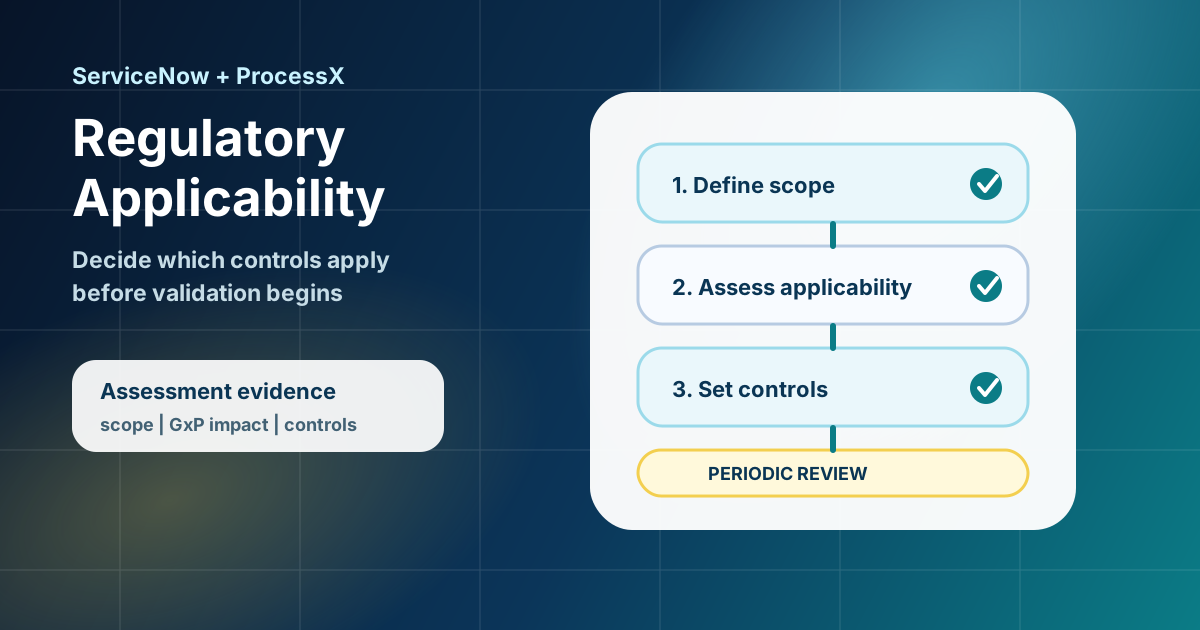
A practical sequence includes define the scope, identify relevant regulations, conduct a gap analysis, develop an action plan, monitor compliance, and document the results. That sequence is useful because it connects the assessment to execution rather than leaving it as a static document.
For life sciences teams, the strongest assessments are cross-functional. Quality, IT, regulatory, security, data, and process owners each see different parts of the risk. The right conclusion depends on understanding both the technology and the regulated business process it supports.
Where ProcessX fits
ProcessX connects regulatory applicability assessments to validation lifecycle management, user access management, periodic review, and incident management. The regulatory applicability workflow helps drive GxP system assessment and can determine periodic review frequency and scheduling.
That linkage matters because applicability decisions age. A system may change, a workflow may expand, integrations may be added, or a vendor release may alter functionality. USDM Cloud Assurance helps keep those decisions current by connecting cloud change signals to impact assessment and evidence.
Explore the ProcessX partner hub, or talk to USDM about automating regulatory applicability assessments in ProcessX.
FAQ: Regulatory Applicability Assessments
What is a regulatory applicability assessment?
It is a structured assessment that determines which regulations, standards, and compliance controls apply to a system, process, product, or use case. It helps teams decide what validation, documentation, monitoring, and governance are required.
When should a life sciences company perform one?
Teams should perform an applicability assessment when implementing a new system, changing a regulated workflow, adding integrations, expanding system use, entering new markets, or evaluating whether a digital process touches GxP data, records, or decisions.
How does this relate to validation?
Applicability assessment helps determine whether validation is required and how deep it should go. It is an input to risk-based validation, documentation planning, periodic review, and ongoing control.
How does ProcessX support the workflow?
ProcessX can manage the applicability workflow inside validation lifecycle management, connect the outcome to system assessment and periodic review, and preserve evidence for audit and inspection readiness.